

Fractures

Fractures

Fractures

Overview:

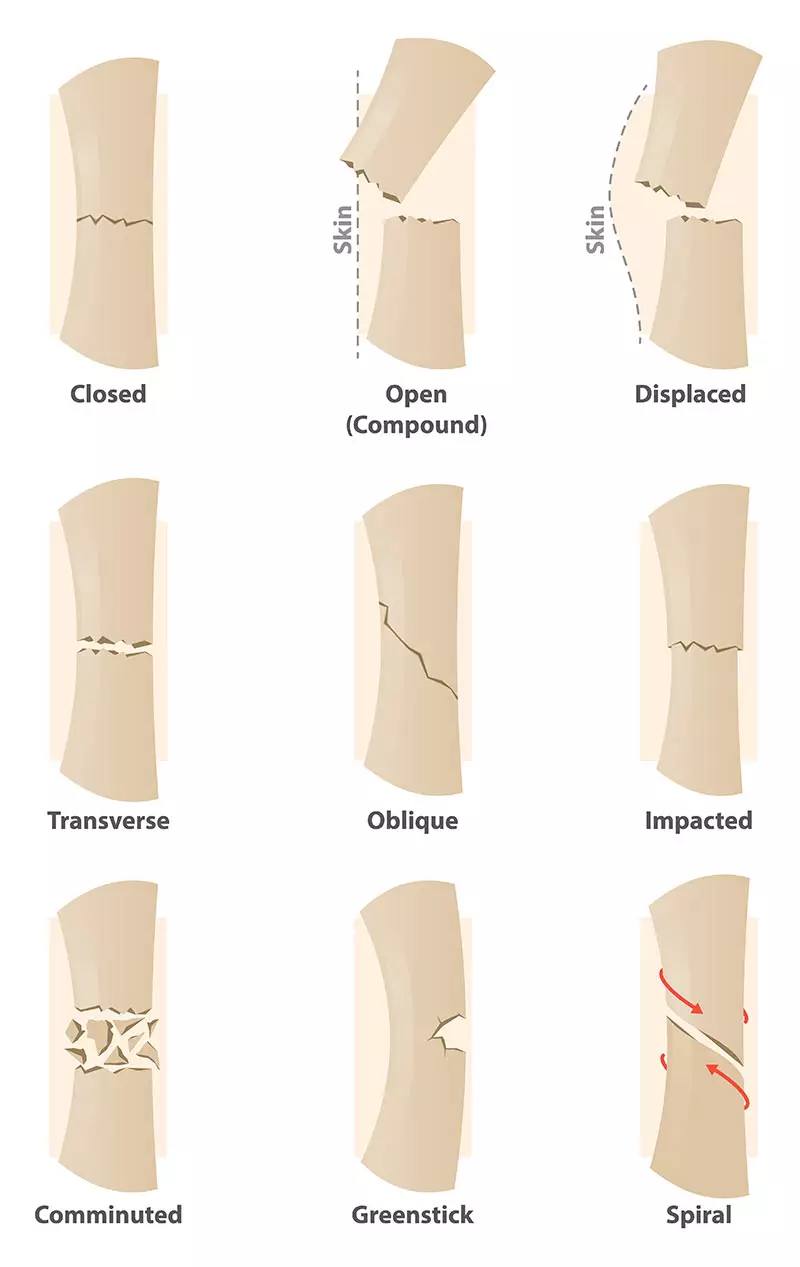
A fracture is a break in a bone caused by trauma such as a fall, being struck by a vehicle, or an altercation with another animal. Fractures can vary in configuration depending on the force and direction of the injury.

Bones may crack partially or break completely, either at one or multiple spots (simple vs. comminuted). Breaks can occur along the mid-portion of the bone (diaphyseal), involve a joint (articular), or affect growth plates in young animals (Salter-Harris). While most fractures do not break through the skin (closed fractures), an open fracture — where bone is exposed — is an emergency due to the risk of infection.

Fractures are universally painful. Pets typically show a sudden severe lameness with swelling of the limb and may have an abnormal angle of the limb. Use caution when moving or comforting your pet after an injury. Normally kind and gentle animals will bite because of the pain. Seek veterinary care immediately if a fracture is suspected.


A fracture is a break in a bone caused by trauma such as a fall, being struck by a vehicle, or an altercation with another animal. Fractures can vary in configuration depending on the force and direction of the injury. Bones may crack partially or break completely, either at one or multiple spots (simple vs. comminuted). Breaks can occur along the mid-portion of the bone, involve a joint, or affect growth plates in young animals. While most fractures do not break through the skin (closed fractures), an open fracture — where bone is exposed — is an emergency due to the risk of infection.

Fractures are universally painful. Pets typically show a sudden severe lameness with swelling of the limb and may have an abnormal angle of the limb. Use caution when moving or comforting your pet after an injury. Normally kind and gentle animals will bite because of the pain. Seek veterinary care immediately if a fracture is suspected.

Basic Fracture Configurations

Diagnosis:

With any trauma, a complete physical examination is the first step to determine extent of injuries. Depending on the situation and trauma, additional tests such as chest X-rays, abdominal ultrasound, or bloodwork may be recommended to ensure your pet is stable for anesthesia and treatment.

X-rays of the injured area are required to confirm the fracture and determine the best treatment approach. At least two straight views (lateral and cranial/caudal) are necessary for all fractures because a single view can disguise or miss the problem. Pain relief and sedation medications are often needed to obtain accurate X-ray images comfortably and safely.
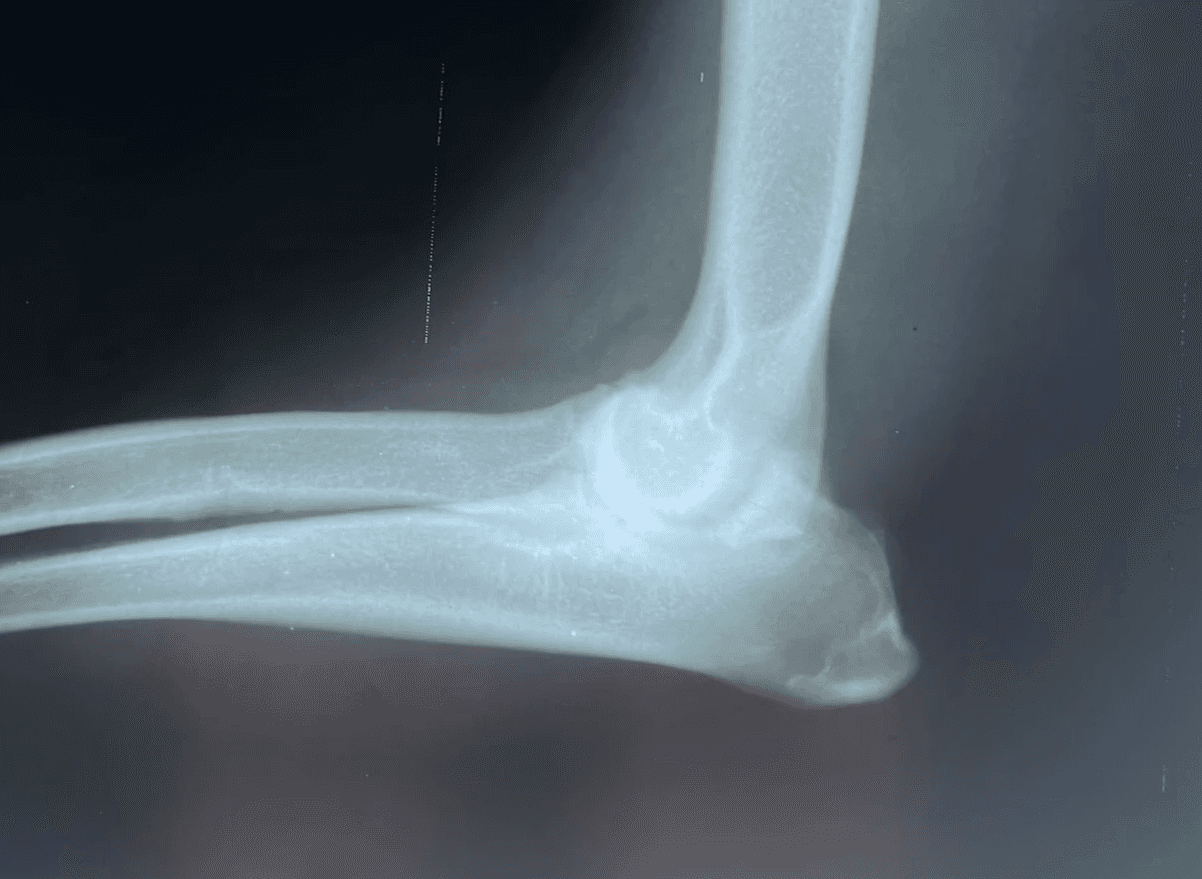
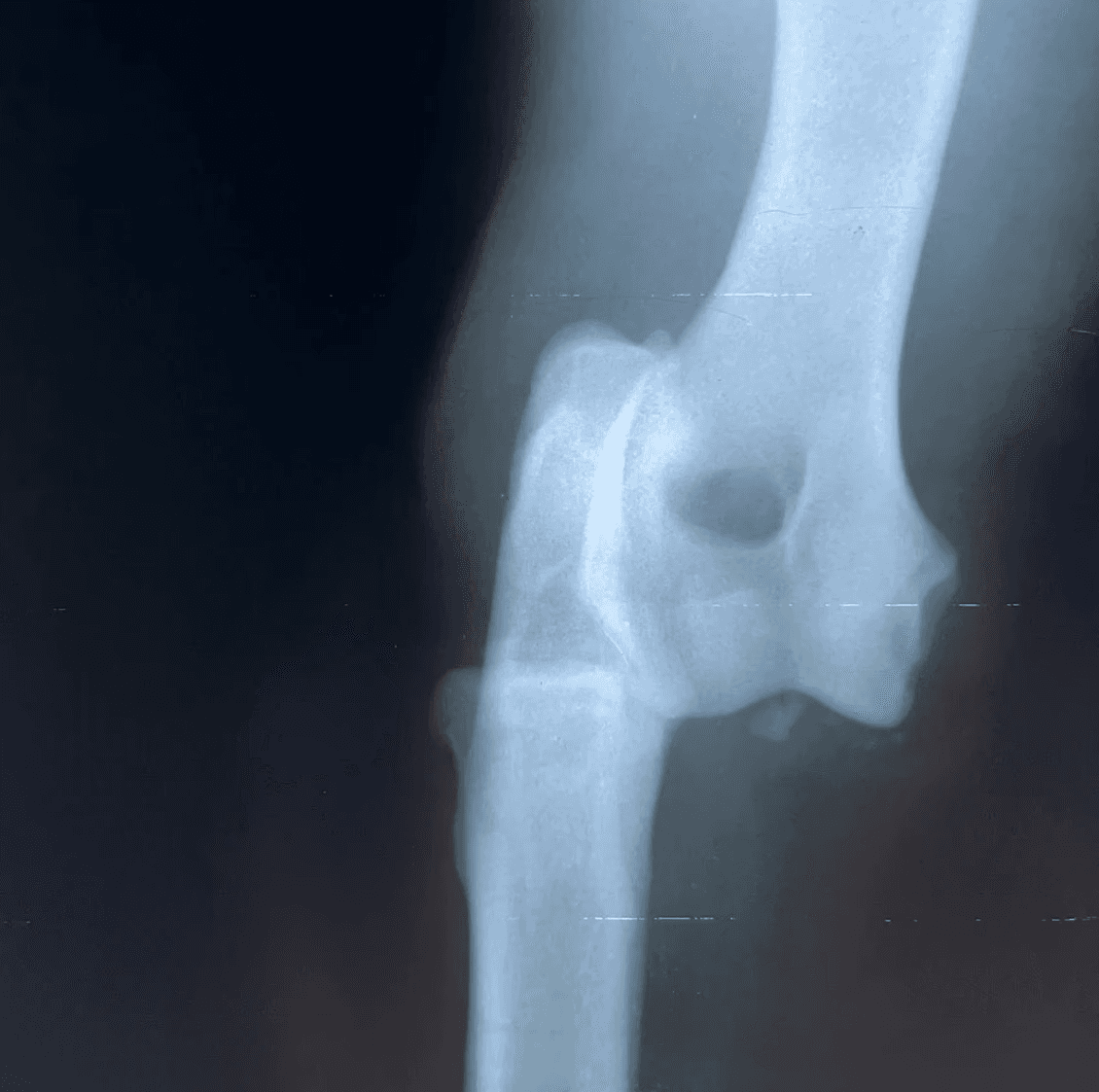
'Normal' appearance with single view
Elbow Luxation with chip fracture missed on single view

Treatment:

The goal of treatment is to realign the fractured bones and stabilize them so they can heal properly. Most fractures are best treated surgically, as surgical stabilization offers the most consistent healing, alignment, and return to normal function.

The goal of treatment is to realign the fractured bones and stabilize them so they can heal properly. Most fractures are best treated surgically, as surgical stabilization offers the most consistent healing, alignment, and return to normal function.

Non-Surgical Management with External Coaptation

Non-Surgical Management
with External Coaptation

In select cases — typically fractures below the elbow or knee in young, healthy pets with minimal displacement — a splint or cast (external coaptation) may be used. This approach involves sedating the pet to align the fracture and placing a supportive splint or cast. Frequent bandage checks, +/- changes are necessary throughout the healing process. Follow-up x-rays will determine if healing is progressing appropriately. However, splints do not provide as much stability as surgical stabilization so healing can take longer and perfect alignment may not always be achieved. Strict activity restriction and bandage care are essential to prevent complications.

In select cases, a splint or cast (external coaptation) may be used. Fractures that may be amenable are usually mildly displaced, simple fractures that are below the elbow or knee. Comminuted, displaced fractures are difficult to realign and maintain aligned with a bandage alone. Fractures above the elbow or knee cannot be appropriately immobilized with a bandage alone. Other patient specific factors (age, health status, etc.) will also affect the decision.

External coaptation involves sedating the pet to align the fracture and placing a supportive splint or cast. Frequent bandage checks, +/- changes, are necessary throughout the healing process. Follow-up x-rays will determine if healing is progressing appropriately.

However, splints do not provide as much stability as surgical stabilization so healing can take longer and perfect alignment may not be achieved. Strict activity restriction and bandage care are essential to prevent complications.

Surgical Management:

Surgery is recommended for most fractures and allows the surgeon to realign the bones and secure them with metal implants such as plates, screws, pins, or wires.

Surgery is recommended for most fractures and allows the surgeon to realign the bones and secure them with metal implants such as plates, screws, pins, or wires. A splinted bandage or cast may be used postoperatively to protect the repair during the initial healing process.

Bone Plate + Screws

Bone plates and screws are used most commonly due to their strength and versatility. The plate can be augmented with pins and wires to improve the strength of the construct or to stabilize small fragments.
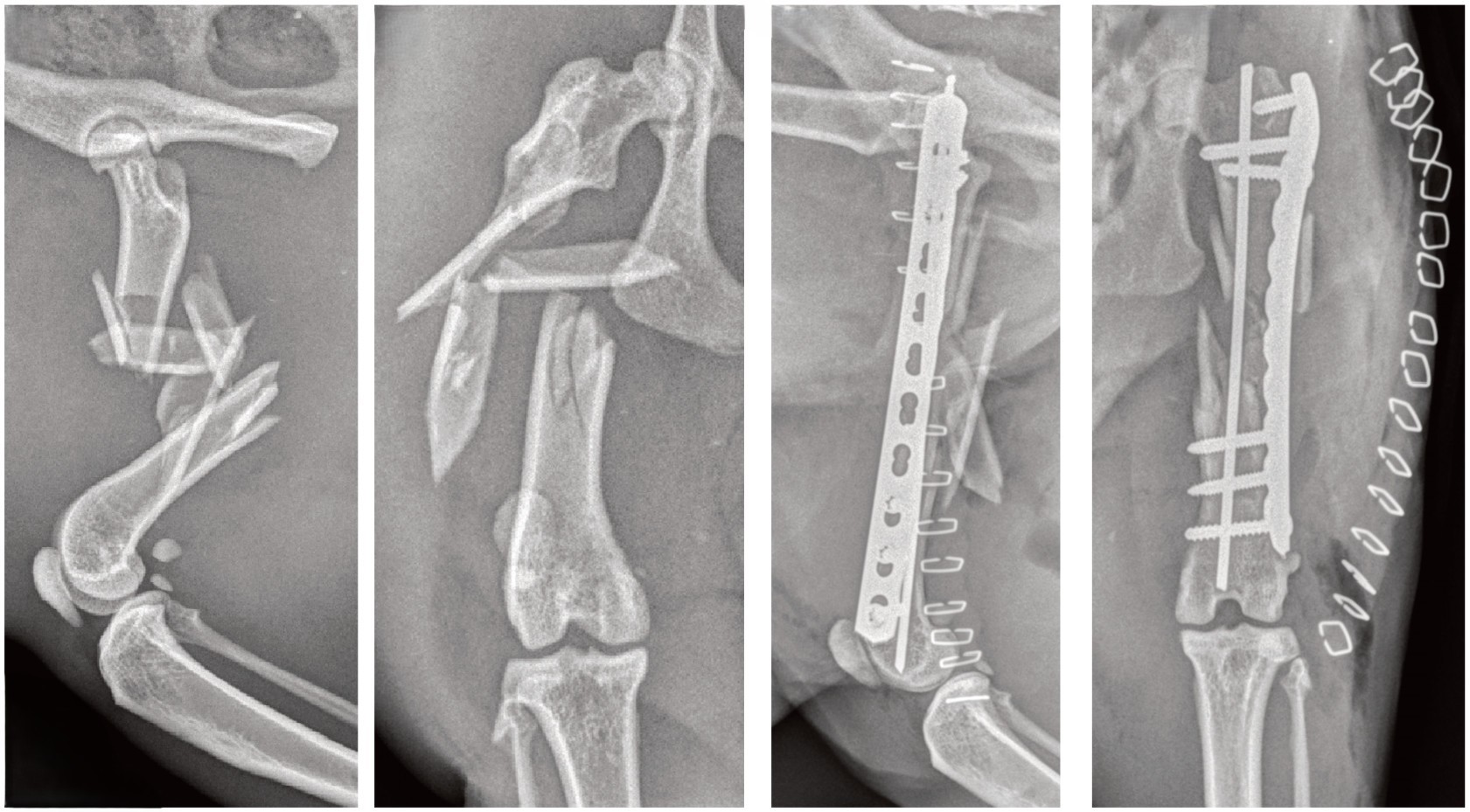
Comminuted femur fracture in a cat

Interlocking Nail

Interlocking nails involve placement of a large metal rod within the bone which is then secured with multiple small bolts. Interlocking nails are particularly strong because they are placed within the center of the bone where they can resist forces most effectively. However, only certain bones can receive an interlocking nail. We also disrupt the normal curvature of the bone which can overstress the implant or affect limb alignment.
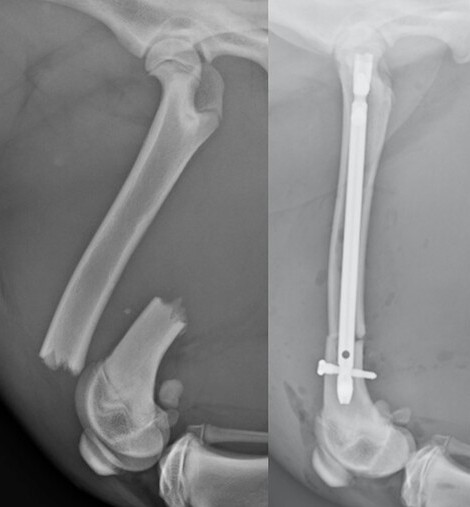
Femur fracture in a young dog
Femur fracture
in a young dog

Screws, Pins and Wire

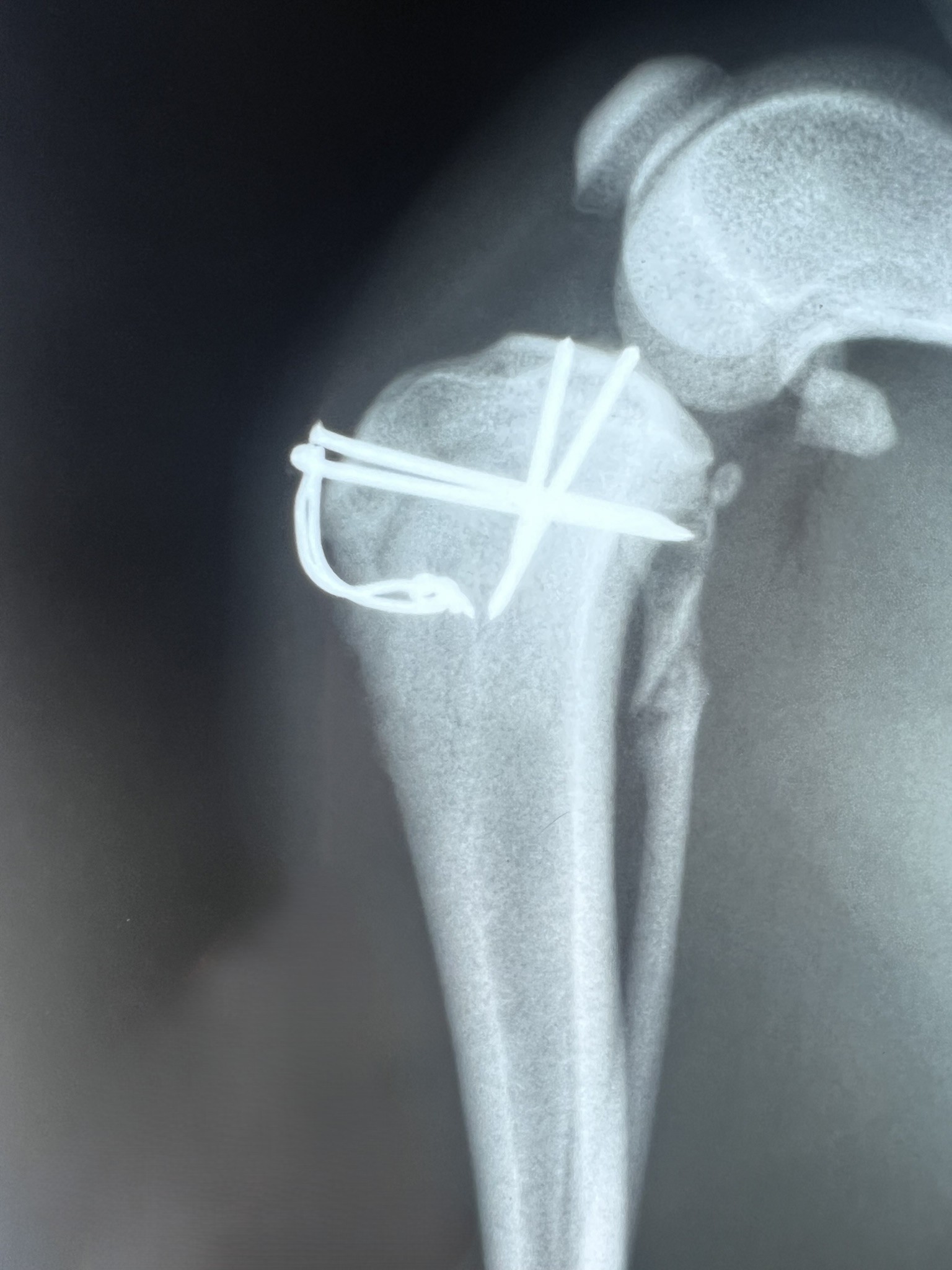
When fragments are very small or near the joint, we are limited to using small implants. These are relatively weak and more prone to failure or loosening. Often a bandage will be used post-operatively to help protect these repairs.
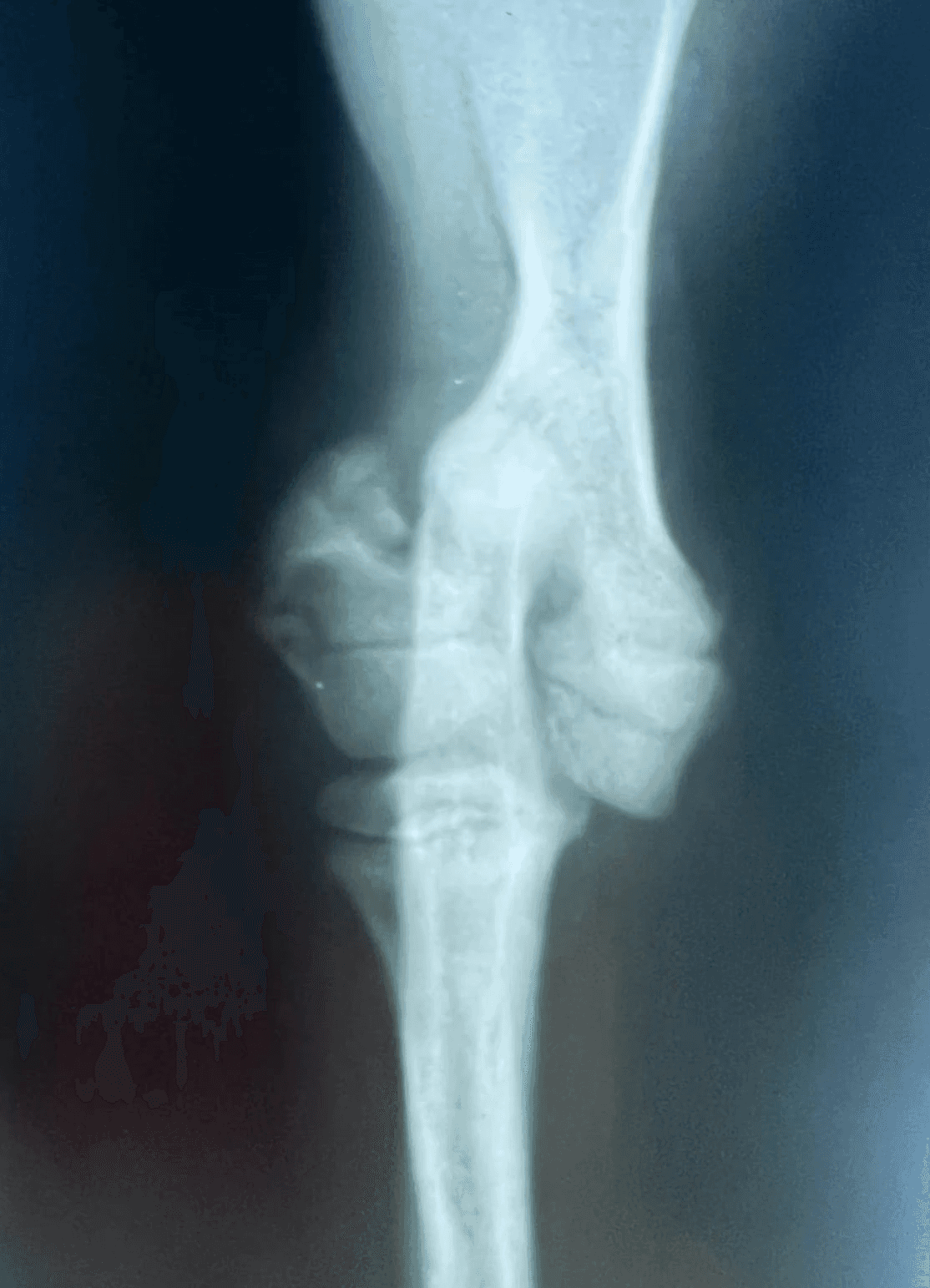
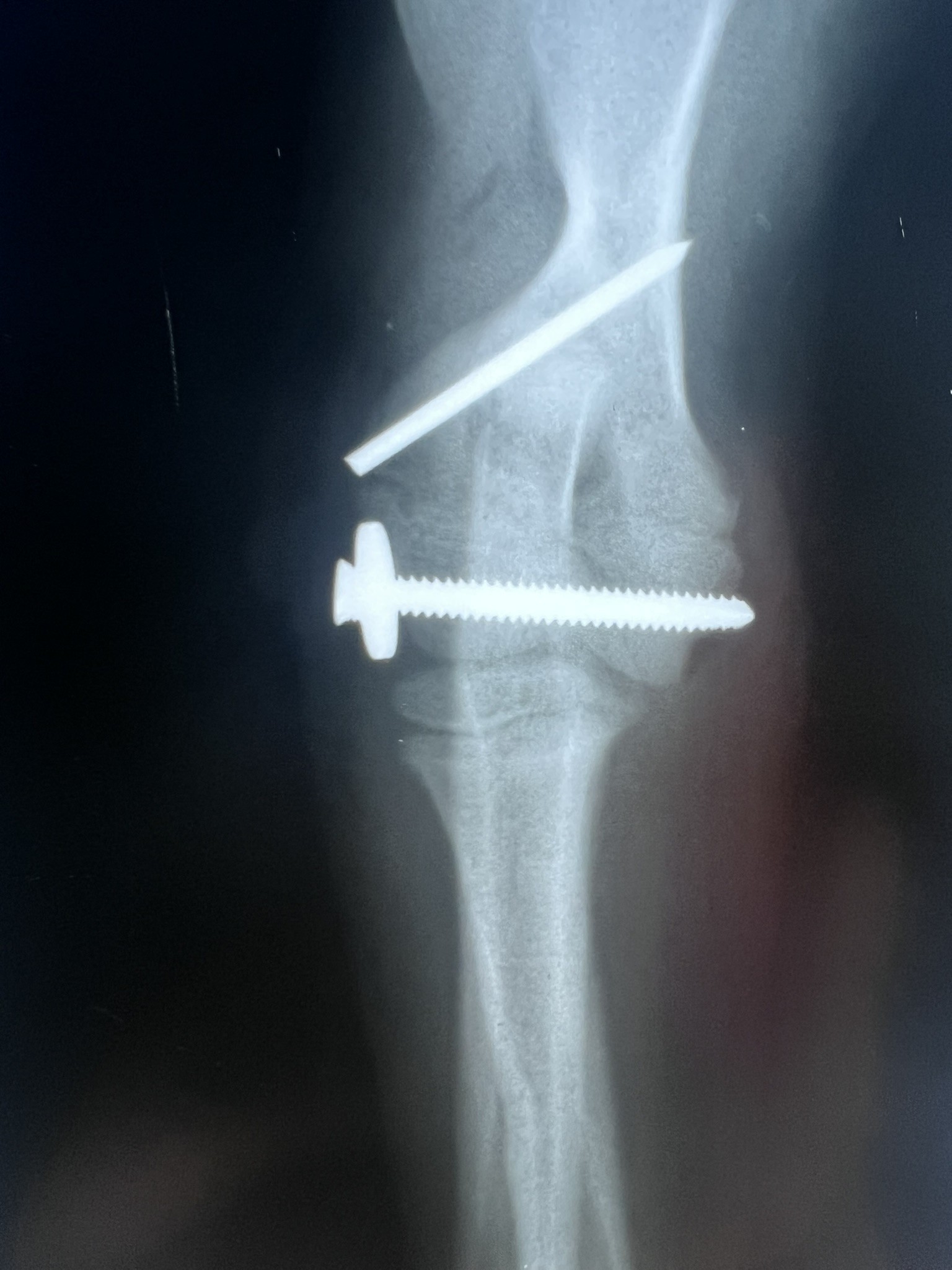
Articular humeral fracture in a puppy
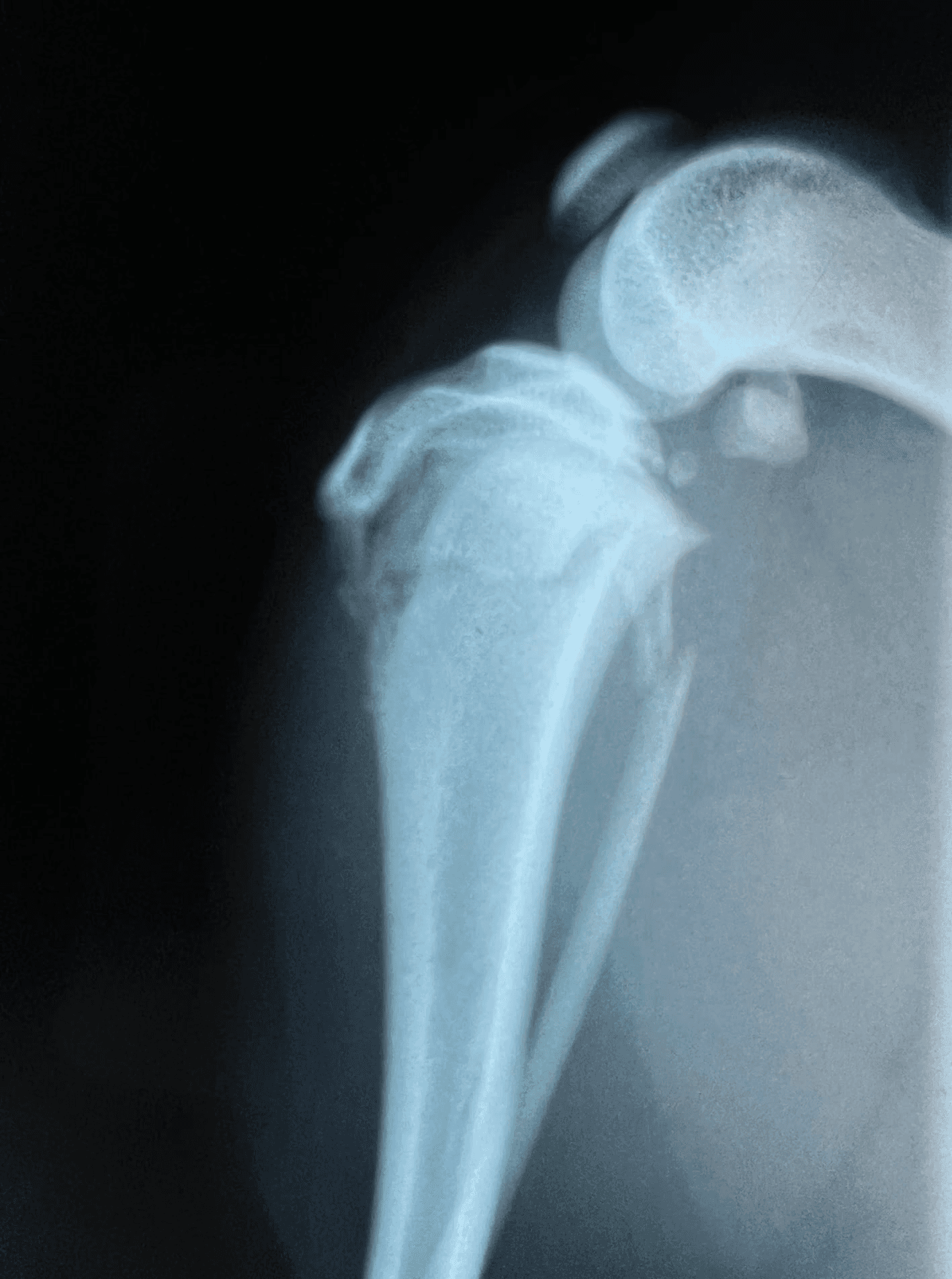
Growth Plate tibial fracture in a puppy

External Skeletal Fixators

ESFs are primarily used if there are open wounds which increases implant infection risk. All implants will ultimately be removed which eliminates this as a long-term issue. ESFs will also be used when patient size limits other implants or the fracture is very near a joint.
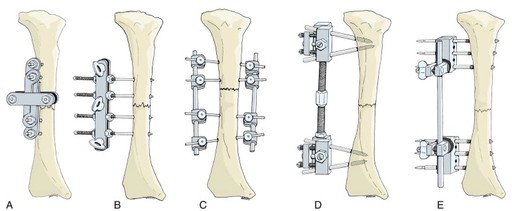
ESF configurations
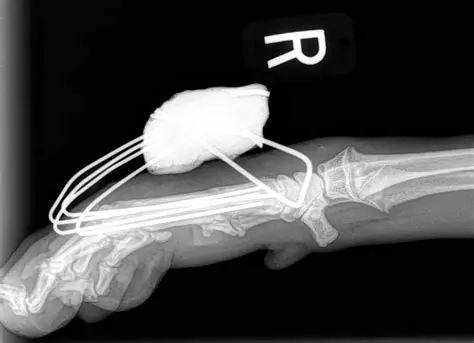
Metacarpal fractures in a cat

Recovery & Healing

Recovery and Healing

Healing is monitored with follow-up X-rays over the next 6–12 weeks. Strict activity restrictions are critical after surgery. Pets are typically restricted to leash walks only and confined to a small indoor space to protect the repair during healing.

Most fractures heal very well with appropriate treatment and diligent postoperative care. Bones typically return to normal or even greater strength once healed. When fractures involve joints, some degree of long-term arthritis may occur, although early and precise repair greatly improves outcomes.

Complications are uncommon but may include implant associated infection (<5%), implant-related irritation, or implant failure (<1%). The incision needs to be protected for a minimum of 2 weeks postop to prevent infection. Allowing unrestricted activity too early is the most common cause of implant loosening or failure, so strict rest is essential.

Healing is monitored with follow-up X-rays over the next 6–12 weeks. Strict activity restrictions are critical after surgery. Pets are typically restricted to leash walks only and confined to a small indoor space to protect the repair during healing.

If a bandage is placed, extra care is necessary to protect it. The bandage will need to be kept clean and dry by preventing any licking and covering it when going outside. Careful monitoring for evidence of slipping is important

Most fractures heal very well with appropriate treatment and diligent postoperative care. Bones typically return to normal or even greater strength once healed. When fractures involve joints, some degree of long-term arthritis may occur, although early and precise repair greatly improves outcomes.

Complications are uncommon but may include bandage related sores (up to 20-30%), implant associated infection (<5%), implant-related irritation, or implant failure (<1%). The incision needs to be protected for a minimum of 2 weeks postop to prevent infection. Allowing unrestricted activity too early is the most common cause of implant loosening or failure, so strict rest is essential.

Prognosis and Outcome:

With appropriate treatment and careful at-home management, most pets fully recover from fractures and return to normal activity. Mid-bone fractures generally carry an excellent prognosis, while fractures involving joints may result in mild long-term stiffness or arthritis. Diligent postoperative care and adherence to activity restrictions significantly reduce complications and support a successful recovery.